Margot Café announced it will close in June 2026 after 25 years in East Nashville. The owner said the last five years were harder than the previous twenty. Hobnob Corner shut down after 46 years because the lease was not renewed. Fido, a Hillsboro Village institution for nearly three decades, announced it will close in 2028 because rising costs made renewing the lease unsustainable. These restaurants had loyal customers, strong reputations, and food people loved. None of that saved them.
You are still open. Your food is good. Your regulars come back. But the tables that filled on a Tuesday two years ago sit empty until Friday now. The customers who would love your place are searching “best brunch East Nashville” or “dinner near me Germantown” on their phone right now, and they are finding the restaurant that opened six months ago with 200 Google reviews. Your food is better. Their website is better. That is the difference, and it is the only difference that matters in search.
Rank Nashville builds search visibility for restaurants across Middle Tennessee. One restaurant per cuisine type per neighborhood. If we are building SEO for a Southern restaurant in Germantown, we will not take another Southern restaurant in Germantown. Call (615) 988-1309 for a free restaurant search audit.
What We Build for Nashville Restaurants
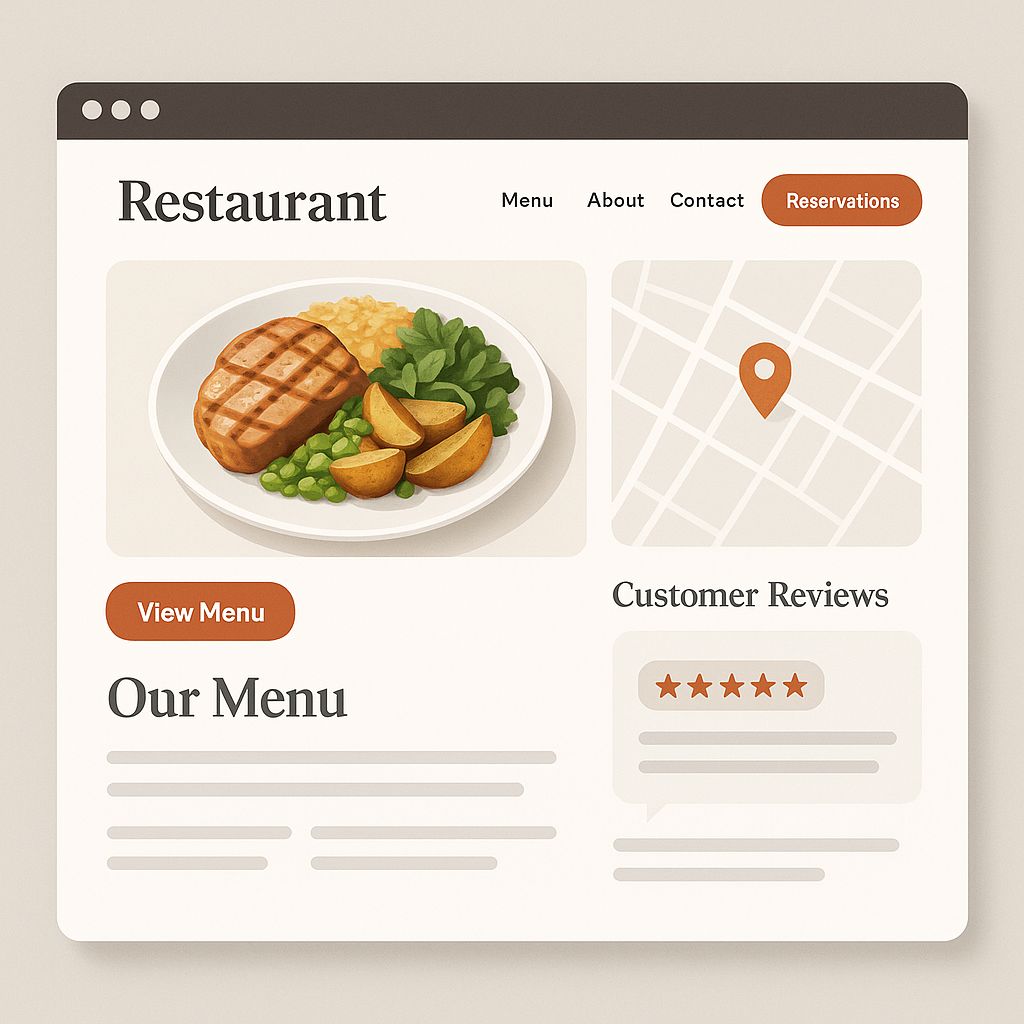
Your menu on Google, not trapped in a PDF. Your menu is probably a PDF uploaded to your website three years ago. Google cannot read it. Every dish name, every description, every price trapped in that file is invisible to search. When someone searches “Nashville hot chicken sandwich downtown,” your PDF does not exist in that search. We convert your menu into pages Google can actually read, where every dish becomes a way for customers to find you.
A Google Business Profile that works before they click your website. Your profile is your storefront on Google Maps. Old hours, missing menu items, photos from 2022, a category that says “American restaurant” when you should be listed as “Southern restaurant” or “brunch restaurant”: each of these quietly costs you customers every day. We keep your profile current with seasonal menu highlights, fresh photos from recent service, accurate holiday hours, and the right categories so you show up for the searches your customers actually run.
Pages for every neighborhood and delivery zone you serve. Nashville’s restaurant market splits along neighborhood lines that matter:
- Broadway/Downtown: Tourist searches, “best restaurants Nashville,” high volume, high competition, transient customers
- East Nashville/Germantown: Local searches, “dinner East Nashville tonight,” repeat customers, neighborhood loyalty
- 12 South/Gulch: Brunch and date night searches, visual-first, Instagram-adjacent audience
- Brentwood/Franklin: Family dinner, weekend occasion, “restaurants near me” with higher spend
- Midtown/Vandy: Late night, college-adjacent, price-sensitive, delivery-heavy
A tourist on Broadway and a family in Brentwood are not the same customer. We build pages that speak to each one in their neighborhood and their language.
Reviews that actually move your ranking. A restaurant with 47 reviews and a 4.3 rating loses to a restaurant with 312 reviews and a 4.1 rating in Google’s local results. Volume matters more than perfection. Recency matters more than history. We set up systems that generate consistent reviews from real diners and respond to every review with language that reinforces your food, your neighborhood, and what makes you worth the trip.
Reservation and ordering connected to your search presence. When Google understands your reservation system and menu structure, it shows your hours, price range, and a “Reserve a Table” button directly in search results. The difference between a plain blue link and a listing that lets someone book a table without visiting your website is the difference between a click and a customer.
Where Nashville Restaurants Bleed Money on Visibility
Every platform you pay for is rented ground. Here is what it actually costs:
| Platform | What You Pay | What You Keep Per Dollar | When You Stop Paying |
|---|---|---|---|
| DoorDash | 15-30% per order | $0.70-0.85 | Orders stop immediately |
| UberEats | 15-30% per order | $0.70-0.85 | Orders stop immediately |
| Yelp Ads | $300-1,000+/month | Visibility only while paying | You disappear from promoted results |
| OpenTable | $1-7.50 per seated diner | Depends on covers | Reservations drop to organic baseline |
| Your own search presence | Monthly SEO investment | $1.00 | Pages keep ranking, keep producing |
Your food costs have spiked. Nashville Post reported that staple ingredients like Brussels sprouts went from $40 a case to $140. Leases are renewing at multiples of what restaurants were paying five years ago. Margins are thinner than they have ever been. On top of that compressed margin, you are paying DoorDash 30 cents of every dollar for the privilege of delivering your own food. That math does not work. Owning your search presence, using the same neighborhood-level strategy that fills appointment books and drives calls across Nashville industries, is the only channel where the investment builds an asset instead of renting someone else’s.
Nashville’s Restaurant Market and Why Search Decides Who Survives
Nashville earned its first Michelin Guide recognition in November 2025, with Bastion, The Catbird Seat, and Locust each receiving one star and seven more restaurants earning Bib Gourmand honors. The 2026 ceremony is coming to Nashville in October. The city’s food reputation has never been stronger nationally, and the competition that comes with that reputation has never been more intense.
Every new building in Nashville has restaurant space on the ground floor. National chains are investing millions to enter the market: In-N-Out is moving its headquarters from California to Franklin with a $125 million commitment. For every independent restaurant that closes, two more open. The survivors are the ones customers can find.
The split between tourist and local traffic defines Nashville’s search landscape. Broadway and downtown searches are driven by visitors who search “best restaurants Nashville” and make decisions based on Google Maps ratings, photos, and review count. Neighborhood searches from locals in Sylvan Park, 12 South, The Nations, or Donelson are driven by familiarity, cuisine type, and proximity. Your search strategy has to serve both audiences or you lose one entirely.
Nashville also runs on seasonal spikes that create opportunities for restaurants prepared to capture them. CMA Fest floods downtown with visitors searching for dining. Patio season shifts search behavior toward outdoor dining. Holiday booking season starts in October for Thanksgiving and December reservations. Brunch searches spike every Saturday and Sunday morning year-round. The restaurants visible during these windows fill tables. The ones that are not visible watch those customers walk into the restaurant next door.
What to Expect and What It Costs
The first step is a search audit. We look at your Google Business Profile, your website structure, your menu visibility, your review velocity, and where you rank for the searches that matter in your neighborhood. You see the gaps before anything changes.
From there we build: menu pages Google can read, neighborhood-targeted content, a profile that stays current, review systems that generate volume, and the technical structure that makes reservation and ordering buttons appear in search results. Each month you see where your visibility stands for the specific searches that bring customers to restaurants like yours.
Restaurant SEO packages start at $1,500 per month. Restaurants with multiple locations, delivery zones across several neighborhoods, or heavy seasonal variation typically invest between $2,000 and $4,000 monthly. One-time search audits are available if you want to understand your position before committing to ongoing work.
Three months is the minimum engagement because that is how long it takes to build menu pages, generate review momentum, and see your profile climb in local results. After that, month to month. If you walk away, every page, every profile optimization, every piece of content stays yours. We do not hold your menu hostage. In a business where margins decide who survives and who closes, every dollar spent on search should build something permanent. That is what we build.
Call (615) 988-1309. Every week your tables sit empty because customers cannot find you is a week where the restaurant down the street with the better website is taking your covers.
Frequently Asked Questions
How long before my restaurant shows up higher in search? Restaurant SEO in Nashville moves at the speed of your market. A restaurant with a neglected Google profile and no menu pages typically sees the first improvements within 60 days because the early work removes problems that were actively suppressing your visibility. Consistent reservation and walk-in traffic from search usually builds between three and five months. Restaurants in less competitive neighborhoods or with a strong existing review base often see faster movement.
My food is great and I have loyal regulars. Why do I need SEO? Your regulars already know where you are. SEO is not for them. It is for every person within two miles of your restaurant who searched for exactly what you serve last week and found your competitor instead. Your food is not the problem. Your visibility is the problem. The restaurant with worse food but a better Google presence gets the first-time customer. Your job is to make the food worth coming back for. Our job is to make sure they find you the first time.
I am a small independent restaurant. Do chains just own Google? They own “restaurants Nashville.” That search is dominated by aggregators, chains, and tourist guides. But nobody searches “restaurants Nashville” when they are actually hungry. They search “farm to table dinner Germantown” or “best patio brunch 12 South” or “late night tacos Midtown.” Those searches belong to the restaurant with neighborhood-specific content and strong local reviews. Chains spread thin across every search term. You go deep in your neighborhood and your cuisine. Depth beats breadth.
What about DoorDash and UberEats? Should I stop using them? Do not stop using them. But understand what they are: customer acquisition at 15-30% commission with zero long-term asset building. Every customer who finds you through your own search presence costs you nothing per visit after the initial investment. Build your owned channel while you use the rented ones, and over time shift more of your customer acquisition to the channel you control.
What if I invest in this and my tables still do not fill? The three-month engagement builds the foundation: menu pages, profile optimization, review systems, neighborhood content. If you are not seeing more phone calls, more reservation requests, and more walk-in traffic attributed to search by month three, you walk away with everything we built. Restaurant SEO in a city with Nashville’s dining demand does not fail because demand is missing. It fails when the foundation is wrong. That is what the audit catches before we start.
I already have a nice website. Why is it not working? Looking good and performing in search are different problems. Your website probably has a beautiful homepage, an about page, a PDF menu, and a contact page. What it does not have is individual pages for each service area, structured menu content Google can read, location-specific landing pages, or the technical markup that tells Google your hours, your reservation system, and your menu items. We build what is missing so your beautiful site also generates customers.
Nick Rizkalla leads our strategy with over 14 years of experience building search systems for restaurants, hospitality, and food service businesses across Nashville. Learn more about Rank Nashville, or call (615) 988-1309 for a free restaurant search audit.
Rank Nashville 615 Main St. Suite 123, Nashville, TN 37206 (615) 988-1309